If you own a vape shop, smoke shop, convenience store or other business selling electronic cigarettes, there’s an important question you should be asking:
Are the vape products on your shelves actually authorized to be sold in the United States?
The answer may be more complicated than many retailers realize.
As of September 2026, the U.S. Food and Drug Administration lists only 48 e-cigarette products as authorized for marketing in the United States.
For vape retailers, this isn’t only a regulatory issue. It can also become a payment-processing and merchant-account issue.
FDA-Authorized Does Not Mean “FDA Approved”
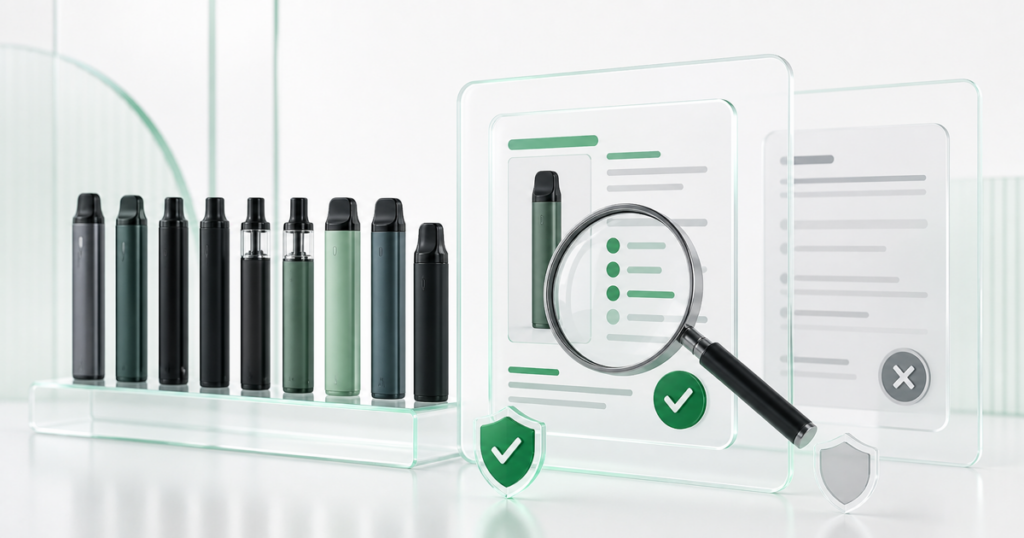
First, it’s important to use the correct terminology.
The FDA does not consider these e-cigarettes “FDA approved.”
Instead, they have received FDA marketing authorization.
A marketing authorization permits a specific tobacco product to be legally marketed in the United States. It does not mean the FDA considers the product safe, and retailers should avoid advertising authorized e-cigarettes as “FDA approved.” The FDA explains this distinction in its consumer guidance, “Is It Really ‘FDA Approved’?”
Retailers who want to understand the review process can also read the FDA’s overview of Premarket Tobacco Product Applications and its page covering tobacco-product marketing orders and supporting documents.
Only 48 E-Cigarette Products Are Currently Authorized
As of September 2026, the FDA’s current list contains 48 authorized e-cigarette products from five manufacturers:
Glas Inc.
Authorized Glas products include the G² device and specific authorized pods.
JUUL Labs Inc.
Authorized products include the original JUUL device and specific Virginia Tobacco and Menthol JUULpods, along with the newly authorized JUUL2 system and specific JUUL2 tobacco and menthol pods.
Logic Technology Development LLC
The authorized list includes specific Logic devices, cartridges, capsules and tobacco e-liquids.
NJOY LLC
Authorized NJOY products include specific NJOY DAILY and NJOY ACE devices and pods.
R.J. Reynolds Vapor Company
Authorized products include specific Vuse Vibe, Vuse Ciro, Vuse Solo and Vuse Alto products.
Importantly, authorization applies to the specific product, not simply the manufacturer or brand.
A retailer should not assume that every product carrying an authorized manufacturer’s brand name is automatically authorized.
“My Distributor Sells It” Isn’t Proof of Authorization
This is one of the most important distinctions for vape retailers.
The fact that a product can be purchased from a wholesaler, distributor, trade show or website does not by itself establish that the product is authorized for legal sale in the United States.
The FDA states that e-cigarettes without the required marketing authorization cannot legally be sold or distributed to consumers in the United States. A pending application generally does not create a safe harbor to sell a product, as explained in the FDA’s Searchable Tobacco Products Database guidance.
The FDA has also taken enforcement action against manufacturers, distributors, and retailers involved with unauthorized e-cigarette products. Retailers can review the FDA’s advisory and enforcement actions for unauthorized tobacco products, its ENDS compliance and enforcement flowchart, and published tobacco-retailer warning letters.
Retailers should therefore verify the actual products and SKUs they carry rather than relying solely on assurances from a supplier.
Why This Matters to Your Merchant Account
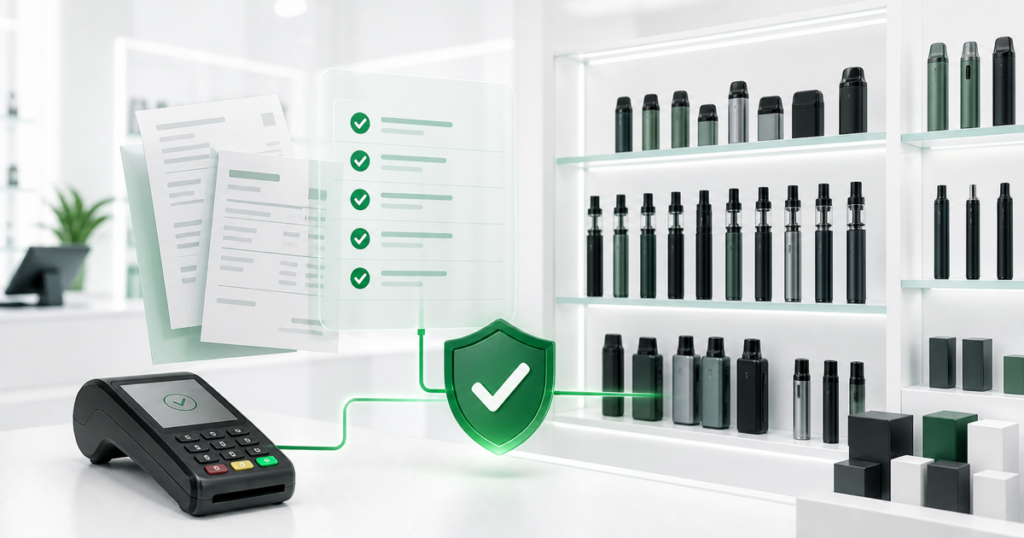
Payment processors don’t evaluate only transaction volume and credit history.
For industries considered higher risk, underwriting can also examine what the merchant sells and whether those products comply with applicable laws and card-brand requirements.
Vape and tobacco businesses can require specialized underwriting.
Depending upon how the business operates, an acquiring bank or processor may review:
• Tobacco and vapor licenses
• Business ownership documents
• Supplier invoices
• Product inventory
• Websites and online catalogs
• Age-verification procedures
• Shipping procedures
• FDA authorization status
• State and local licensing
• Card-present versus ecommerce sales
• PACT Act compliance for applicable remote sales
• Other regulated products sold by the business
An account approved to process legitimate tobacco products should not be viewed as blanket authorization to process payments for any product subsequently added to the store.
Unauthorized Products Can Create Processing Risk
If an acquiring bank or payment processor discovers products that were not disclosed or that cannot legally be sold, the merchant could face additional review.
Depending upon the circumstances and processor requirements, consequences could include:
• Requests for additional documentation
• Processing restrictions
• Reserves or funding delays
• Merchant-account termination
• Card-brand compliance concerns
• Regulatory issues
• Difficulty obtaining future merchant processing
The risk becomes even greater if a merchant intentionally misrepresents what it sells.
Don’t Hide Products Under Another Merchant Account
A vape retailer should never attempt to solve an underwriting problem by processing transactions through a different business, merchant account or misleading business classification.
For example, a merchant should not attempt to process restricted products through a convenience-store merchant account simply because its vape or tobacco processor won’t approve them.
Similarly, an online store should not use a retail merchant account to process undisclosed ecommerce activity without first obtaining approval from its processor.
Accurately disclosing the products being sold and how they are sold is essential.
What About THC, Delta-8, THCA and Other Cannabinoids?
This is another area where vape retailers need to be careful.
A traditional nicotine/tobacco processing approval should not automatically be interpreted as approval for cannabinoid products.
Products containing THC, THCA, Delta-8, Delta-9, HHC or other cannabinoids can have completely different federal, state, card-brand and sponsor-bank requirements.
If your product mix changes, talk with your payment processor before you begin processing the new products.
The same principle applies when moving from an exclusively retail business into ecommerce.
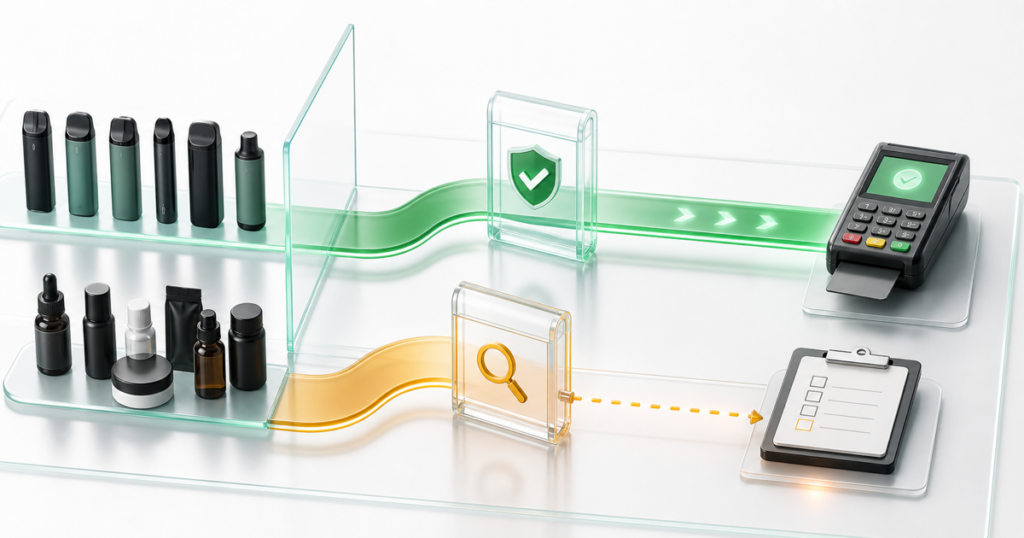
Ecommerce Vape Sales Require Additional Attention
Selling authorized vape products inside a retail store and shipping vape products to customers across the country are not the same risk profile.
Online ENDS sales can trigger additional federal and state requirements, including requirements associated with the PACT Act. The Bureau of Alcohol, Tobacco, Firearms and Explosives provides a PACT Act registration and compliance form for ENDS sellers, and the FDA maintains separate federal guidance for tobacco retailers.
Depending upon the transaction and jurisdiction, businesses may need to address:
• Federal and state registrations
• State and local tobacco taxes
• Customer age verification
• Adult-signature delivery requirements
• Shipping restrictions
• State-specific product restrictions
• Recordkeeping and reporting
• Card-brand registration requirements
A simple “I am 21+” checkbox on a website should not be treated as a complete vape compliance program.
What Should Vape Merchants Do?
Start with your inventory.
Create a complete list of every e-cigarette and vape product your business sells and identify the manufacturer, product name and specific variation.
Compare those products against the FDA’s current authorized e-cigarette information.
Don’t assume that a product is authorized simply because:
• Other vape shops sell it
• A distributor carries it
• You’ve sold it for years
• The manufacturer submitted an FDA application
• The packaging says “compliant”
• The brand itself has other authorized products
Authorization should be verified at the specific product level.
Then review your merchant account to make sure your processor understands exactly what you’re selling and how you’re selling it.
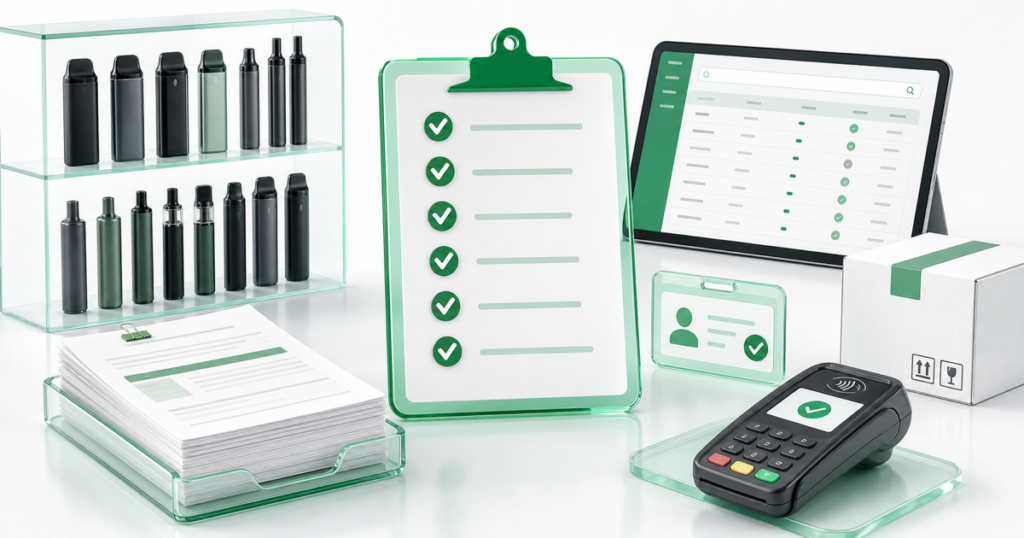
Payment Processing for Vape & Other Higher-Risk Businesses
Finding payment processing for a higher-risk business shouldn’t mean hiding what your company does.
At Q Solutions, we work to understand a merchant’s business model, products and processing needs so we can identify appropriate payment-processing solutions.
Whether you’re operating a retail vape shop, smoke shop or another specialty business, proper underwriting at the beginning can help prevent much larger problems later.
Have questions about your current payment-processing setup?
Contact Q Solutions to discuss your business and processing needs.
Q Solutions, LLC
Quality Service. Quality Solutions.
(877) 609-6377
gowithq.com
Official FDA Resources and Supporting Documents
– Current FDA-authorized e-cigarette list
– FDA Searchable Tobacco Products Database
– FDA database terminology and additional information
– Tobacco-product marketing orders and supporting records
– Premarket Tobacco Product Applications
– FDA guidance on “FDA approved” terminology
– FDA advisory and enforcement actions for unauthorized tobacco products
– FDA ENDS compliance and enforcement flowchart
– FDA tobacco-retailer warning letters
– Federal requirements for retail tobacco sales
– ATF PACT Act registration and compliance form for ENDS sellers
This article is provided for general educational purposes and should not be considered legal or regulatory advice. Laws, card-brand rules, FDA authorizations and acquiring-bank requirements can change. Businesses should consult appropriate legal and compliance professionals regarding requirements applicable to their operations.